
 anadmin
 On 18 November 2025, the Indian State triumphantly declared the killing of Madvi Hidma,
Indigenous Adivasi activist and Naxalite leader, along with his comrade and life partner,
Madakam Raje, and eleven other people. With this military “victory,” the BJP Government
reiterated it was successfully moving towards the Home Minister Amit Shah’s deadline of 31
March 2026 to end the Naxalite movement in India. This declaration is part of the BJP
government’s repressive policies targeting Adivasis, Dalits, Muslims, Christians and other
marginalized communities, to facilitate the expropriation of land and natural resources
by capitalists close to the government.
We, the undersigned, unequivocally stand with the Adivasi villagers and human rights
defenders, and India’s civil society, who have strongly noted that Hidma and the others were
captured unarmed and taken to the Maredumilli forests, Alluri Sitarama Raju District, Andhra
Pradesh, where they were tortured and killed extrajudicially in two groups over two days.
Shortly before, Chhattisgarh’s Deputy Chief Minister and Home Minister had “visited” Hidma’s
village of Puvarti, Sukma District, Bastar Division. As a part of political performance and
theatrics, they had food with his mother, Madvi Pojje, who then entreated Hidma to surrender.
Since January 2024, the Indian State has been conducting extrajudicial killings of its Adivasi
peoples – both Naxalite cadres and villagers – under a rewards-for-killing policy for its
militarized police. Villagers and civil society have repeatedly noted that these killings are often
preceded by capture and torture, but are described by the state as an ‘exchange of fire’ or
‘encounter’ between security forces and insurgents. Of the over 550 people killed until
September 2025, a significant proportion were killed in the eco-sensitive, biodiverse, mineral
rich forested hills of the Bastar Division in south Chhattisgarh, home to numerous Indigenous
Adivasi communities such as the Gonds and Mariyas.
The Bastar Police Action and Outcome Report 2024–2025 notes that in 2024 alone, while
reported ‘encounters’ doubled from 68 in 2023 to 121 in 2024, killings increased tenfold, from
20 to 217. Many of the bodies of those killed extrajudicially have been left to decay and become
infested with maggots, making identification by family members nearly impossible. Some bodies
were forcibly burned to erase evidence of capture and torture and to prevent large numbers
from attending public funerals. Madvi Hidma and Madakam Raje’s bodies were returned to
Hidma’s village of Purvati in Sukma District, Bastar, for quick cremation, again erasing the
evidence of torture and extrajudicial killing. Thousands of Adivasis still attended to pay their
last respects.
By treating Naxalites domestically as non-state armed actors and not acknowledging the State’s
counterinsurgency operations under international humanitarian law, India evades its
obligations under Common Article 3 of the Geneva Convention and Additional Protocol II.
Instead, a domestic policy of unconditional surrender and ‘reintegration’, including the
rearming of surrendered Naxalites as the ‘District Reserve Guard’, is openly promoted.
Although Bastar’s Naxalite movement is rooted in Indigenous socio-political exploitation, the
Indian State continues to evade political settlement, because it would entail centring social
justice, which is against the interests of the mining and industrial corporates who see Bastar as
a site for resource extraction. Instead, the approach of ‘unconditional surrender’ or ‘be killed’
targets Adivasi communities as a whole, with the aim of isolating and drying up support for the
insurgent movement that has resisted the entry of corporations.
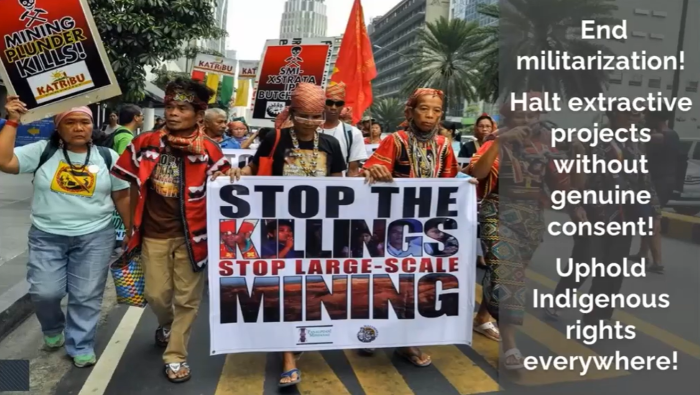
Militarization now permeates every aspect of Adivasi lives and livelihoods in Bastar in the form
of surveillance, restricted movement, fear and threats of arbitrary detentions, extrajudicial
killings and sexual violence. Human rights violations by militarized security forces are
compounded by the complicity of the executive, legislature, and judiciary, in which peace
remains elusive even as the State reassures the people of its coming.
Over the past two decades, numerous corporations have entered into agreements with the
Chhattisgarh government. The processes of tenders/allotment consistently
violate constitutional and legal safeguards and international FPIC standards. Entire rivers, such
as the Sheonath, have been sold to private companies. In 2022–2023, Chhattisgarh’s mineral
revenue reached INR12,941 crores [USD153 million], with nearly half generated from Bastar’s
Dantewada district. Yet, Chhattisgarh’s Adivasis remain among the most impoverished Indian
peoples. Human development indicators, including literacy and health, in Bastar’s seven
districts are among the lowest in the country.
It is in this context of increasing state-corporate wealth alongside diminishing Indigenous
existential agency that Bastar continues to be a key site of Adivasi socio-political struggles
against the ‘developmental violence’ approach that excludes any opportunity for justice-based
peace. This includes the deliberate dismantling of youth-led mass mobilizations in Bastar that
were demanding implementation of their constitutional rights and an end to the human rights
violations in the region, sweeping arrests of Adivasi youth leaders/activists under charges of
‘terrorism,’ and the wholesale militarization of Adivasi-dominant regions.
In these ways, the Indian State is systematically erasing Adivasi land rights and human, civil,
and political rights for capitalist interests. Over the last two decades, every government has
violated the right to life guaranteed under Article 21 of the Constitution as well as India’s
obligations under international laws and charters.
We urge people the world over to call on the Government of India to immediately:
- End all forms of violence, including extrajudicial killings, arbitrary arrests,
and torture and end state militarization of Bastar; - Institute an independent judicial inquiry into the circumstances of all the illegal
killings carried out in the name of Operation Kagar, including Madvi
Hidma and Madakam Raje; and hold State forces accountable for their actions; - Initiate dialogue and political engagement with the Adivasi communities
to genuinely address the demands for constitutionally guaranteed autonomy, land
rights, and rights over natural resources.
Signatories
- International Solidarity for Academic Freedom in India (InSAF India)
- Indian Alliance Paris
- India Labour Solidarity (UK)
- 12ummah.com
- International Council of Indian Muslims, Switzerland
- Indian Scheduled Caste Welfare Association UK
- Indian Workers Association GB
- AI, Germany
- Revolutionary Students’ Front, WB, India
- Sangrami Sramik Manch, WB, India
- Solifonds, Switzerland
- Indian American Muslim Council (IAMC)
- Friends Of Indian Revolution, Canada
- Telangana Vidyavanthula Vedika — North America
- Nazariya Magazine, India
- Boston South Asian Coalition, USA
- Sangrami Krishak Manch, WB, India
- Alliance Against Islamophobia, Australia
- South Asia Solidarity Group, UK
- Majdoor Adhikar Sangthan, Kundli, Sonipat
- London Collective for Palestine, UK
- Coalition Against Fascism in India (CAFI)
- Forum Against Repression, Telangana
- Indian Nationalists Movement, Warangal
- The Humanism Project, Australia
- Progressive South Asia Collective, Purdue University, USA
- Other Indias
- Resist US Led War SFSU, San Francisco
- South Asian Diasporic Action Collective (SADAC), Canada
- Insure Our Survival, UK
- cBalance
- Transform South Asia, India
- Money Rebellion, UK
- POSSIBLE FUTURES, Philippines, Brazil
- Center for Environmental Concerns, Philippines
- AMAN MALUKU, Indonesia
- Rational Medicine Network, India
- Calcutta AHEAD (Action on Health, Education & Development), Kolkata
- Revolutionary Writers Association (VIRASAM)
- Land Forum India, Sehore
- International Indigenous Peoples Movement for Self-Determination and Liberation
(IPMSDL) - Campaign to Defend Nature and People (CDNP), Pan-India
- National Indigenous Women Forum (NIWF)
- ROT Collective, UK
- Justice For All Canada, Toronto, ON
- Bhagat Singh Chhatra Ekta Manch, Delhi, India
- The Institute for Research & Advocacy of Borneo (Link-AR Borneo), Indonesia
- Corner House, UK
- International League of Peoples’ Struggle – UK Country Chapter
- RJ Working, UK
- Oxford South Asian Ambedkar Forum (OxSAAF), UK
- Prisoners Voice Platform (TSP)
- United for Climate Justice, Brussels
- ATSIIEO (Australia), Australia
- Kalikasan People’s Network for the Environment, Philippines
- Peoples Rising for Climate Justice
- The RYSE, Stroud, UK
- Maoist Internationalist Study Group, Sheffield
- Indigenous Peoples Rights International (IPRI), Philippines
- Walsall Kobar Friendship Association, UK
- Kings Heath United Against Racism, Birmingham UK
- South Asia Justice Campaign
- SALAM (South Asian Left), NYC, USA
- Scientist Rebellion Perú
- Scientist Rebellion India
- Food Not Cops Birmingham, UK
- Hindus for Human Rights UK
- AVEG-KON – European Confederation of Oppressed Migrants, Europe based migrant
organization - People’s Coalition on Food Sovereignty, Global
- PCR del Uruguay Montevideo, Uruguay
- Young Struggle Europe
- Southern Illinois Democratic Socialists of America (SIDSA)
- Global Majority Copwatch
- Union Prolétarienne Marxiste-Léniniste – France
- Prolekult, West Midlands, UK
- PCML de República Dominicana
- Birmingham Queers for Palestine


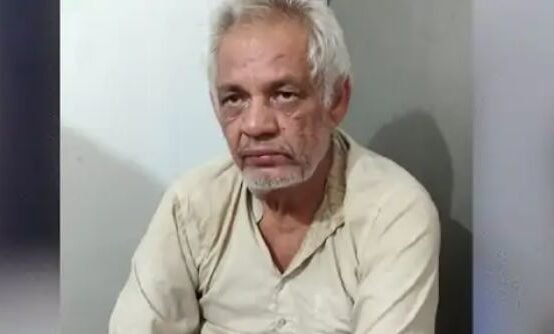 పాట్నా జైలులో CPI(మావోయిస్టు) పోలిట్బ్యూరో సభ్యుడు ప్రమోద్ మిశ్రా ఆమరణ నిరాహార దీక్ష
 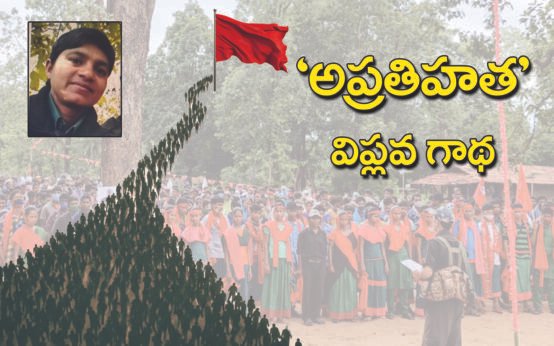 ‘అప్రతిహత’ విప్లవ గాథ – ముసాఫిర్
 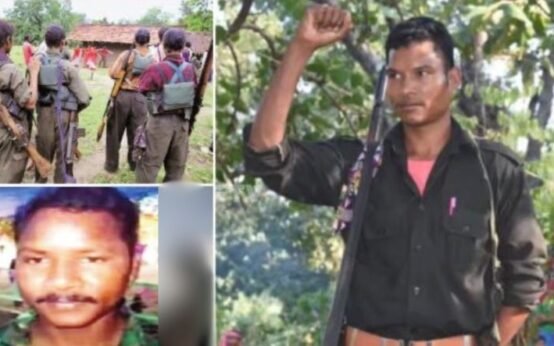 అరెస్టును లొంగుబాటుగా చూపించడంలో మర్మమేంటి?
  తల్లికి మావోయిస్టు పార్టీ నాయకుడు పాక హనుమంతు @ గణేష్ లేఖ
  ఏ మార్గాన్ని అనుసరించాలి?
  ఆపరేషన్ కగార్ కు వ్యతిరేకంగా జర్మనీ,టర్కీ లలో కార్యక్రమాలు