 anadmin
(This article is originally published in Kolimi, a Telugu literary web magazine. And is translated by Vimal)
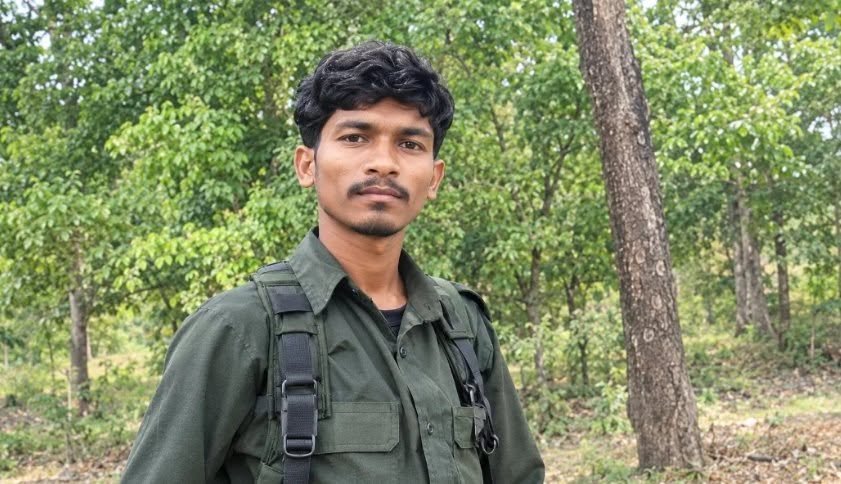
Naiti hanged himself. Neither did he help his home, nor did he belong to the movement he left behind. He found himself caught between the two, with a noose around his neck. The very hand that had held a weapon strangled him. For over a year now, we have been watching terrible things one after another in the revolutionary movement. And now we hear of Naiti’s suicide.
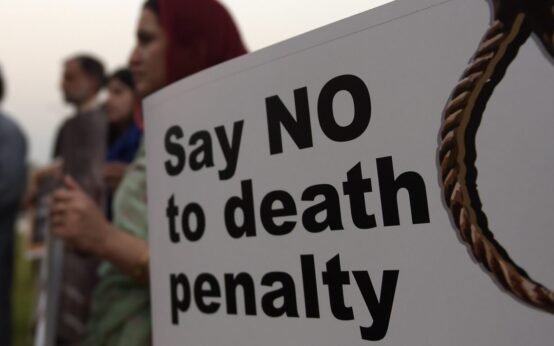
What might Naiti have thought in those final moments? Was there sulking in his final act? Was there anger? Was it a protest? Or was he turning away from it all? Was he helpless, unable to decide anything at all? Who knows? We cannot say for certain. Meanwhile, a Jagdalpur court has sentenced ten Adivasis to death by hanging. These are the times when heads are hanged and minds are strangled. The whole social and revolutionary tragedy of our times is encapsulated in the forced departure of Naiti.
At what age did he join the revolution? We do not know. Nor do we know how many dreams he carried with him. We know nothing of the daring acts he performed or the extraordinary events he took part in. In the end, along with the news of his suicide, come doubts about whether he was murdered.
There are claims that he surrendered on February 27 last year and came to a Naxal rehabilitation centre this June. Others say that he surrendered this year. One fact is certain. On the 21st of this month, Naiti, an Adivasi, was found hanging in the bathroom of a government rehabilitation camp in Bijapur.
It is not easy to know the truth in these details. What truth can we find in the words of a state that lives by lies? A state that can make everyone say what it wants and say what it wants to hear has spread across this land. Can the truth ever be known here?
Once, people like Naiti were there in these remote lands to tell us the truth. Many of them died. In one way or another. Now Naiti, too, has “committed suicide.” Wasn’t he murdered?
People will endlessly pore over these details and argue about them. But to what end? Lifeless shards of information. Don’t get caught up in them. Think straight about Narsu Boddu, known as Naiti. Stand at the edge of his tragic life and let us introspect. Examine our own conduct. Let us ask ourselves how cautious we are, how committed to neutrality. We can bind our hands, silence ourselves, and keep quiet, feeling that this tragedy, too, will eventually disappear into time. And we can live without a shred of worry.
Was this a natural death? No. Nor did he fall while standing on one side of a line, fighting an adversary on the other. It was a violent end in an enemy camp grandly rechristened a ‘rehabilitation camp’. Whether it was murder or suicide, he was pushed abruptly into the arms of death before his time. It was an unnatural death. Unless we ask how someone who belonged in the revolution came to be in rehabilitation, Naiti’s death will never make sense.
We can say many things about the process of rehabilitation. It should be humane. It should have the generosity to forgive lambs gone astray. It should wipe away old training and skills, and become a workshop where people learn new ways of living. It should never become indefinite detention. All of these apects are good and deserve discussion. But, since this was a suspicious death in a rehabilitation centre, we should squarely accuse the state and say it bears responsibility.
We can say a great deal about what the state must do and must not do once a person enters a rehabilitation camp. But why did Naiti come there at all? Who did bring him there? How was he driven out of his own home, out of the dwelling of the revolution, and into rehabilitation? Once a man has been dragged out of his world, is there any rule for how long he may be kept? Is there any rule book at all? And are we even ready to look at the word “rehabilitation” politically? As long as we do not ask this, we have accepted Naiti’s death. We have also accepted the sending of people like him into such camps.
Some may say that because he laid down his weapon, the state should show him compassion. Others may hope that because he left the revolution, he would be granted human rights. Such people now have the upper hand. But is that all the state does? Is revolution merely a legal issue? Is carrying weapons by revolutionaries the state’s only problem? If someone is law-abiding, does that mean their life is secure? The rehabilitation camps for surrendered Naxalites are lawful, are they not? Then why did Naiti lose his life? The police can never admit that his was a killing in due process. So his was a political killing.
Whether Naiti died by suicide or was murdered, the questions his death raises are political. They take us back to several fundamental questions: Why do people like Naiti choose revolution? Why do they leave it? And why are they compelled to surrender?
These questions also lead us to examine the “celebration” of surrender this year, projected as a revolutionary path and presented as though it had the unanimous approval of all. That celebration must be seen alongside the sight of Naiti’s head hanging from a noose, even as the year-long festivities continued.
All these things must be viewed together. Only then can we hear the questions that swarm around his death.
When wars end, the horrors of refugee camps become the subject of public debate. So do the human rights that are denied or trampled there. That is as it should be. But the causes of the war recede into history. They slip into the inside pages of books. They sink into the collage of memoirs.
Then, just when we begin to imagine that all is well, the cries from the camps disturb the “civilised” world. Yet the reasons behind the war fade from our consciousness. We lose sight of who the aggressors were, who rose in a struggle for freedom, for their land, their dignity, their very lives, and who marched in conquest. We turn away from those who betrayed. The world keeps coaxing us to remain calm, to let not even a spark of anger stir within us, to remain unmoved and comfortably at ease.
It was easier to tell Adivasis to take up arms. How much training could it have taken to persuade them to lay those arms down? How many theories might have been expounded? How many pictures of the changed situation were painted in how many ominous shades? How difficult was it to make them understand the words, “We must all leave”?
On the other side, Kagar too kept forcing them to vacate. What remained was rehabilitation. Correcting one’s mistakes is called resettlement. But surrender and rehabilitation have become the new idioms “in our changed situation”.
We must understand how the Adivasis, who have been at the heart of the revolution for so long, are coming to terms with this forced withdrawal and the deaths that have accompanied it. We must listen to the tremors Naiti’s silent exit has sent through the rehabilitation camps. We must listen to what stirs in the depths of Adivasi hearts.
Sitting beside Naiti’s body, the Adivasis must have noted the crisis engulfing their own lives in rehabilitation, and the crisis confronting the revolution itself. They have witnessed thousands of deaths in the course of the revolution. Yet a suicide must still have shaken them. And if Naiti was murdered, they would know who was responsible.
This is the tragedy of the revolution today. This is the predicament it finds itself in. Some will refuse to look at it this way. They will see Naiti’s suicide merely as the failure of the revolution. They will search for the reasons in political and ideological errors. Some will blame leaders who are dead and wash their hands of the matter.
What, then, might have crossed Naiti’s mind in that final moment? What did he think of the revolution and of surrender? We cannot know for certain. Nor can we arrive at easy answers.
This, surely, is what literature must grapple with in our times.
Time waits for those who can grasp it. It will wait, keeping watch on Naiti’s behalf, for as long as it takes, until the truth finally unfolds.
Footnote
1 Naiti alias Narsu Boddu, an Adivasi, 26 years old, who hailed from Kamkanar village in the Gangaloor area of Bijapur district, Chhattisgarh, reportedly “committed suicide” on October 21, 2026, at the District Police Rehabilitation Centre, Bijapur.

 పది మంది ఆదివాసీల ఉరిశిక్ష రద్దు కోసం 16న సభ
 మండుతున్న అడవి – ముసాఫిర్
 కన్నబిడ్డల జ్ఞాపకాలు నిలుపుకోవడమూ నేరమా? రాకేశ్ స్థూపాన్ని కూల్చేసిన పోలీసులు
 వార్ టూరిజం : జాఫ్నా టూ బస్తర్ – ముసాఫిర్
 చివరి రక్తం బొట్టు వరకు విప్లవ పంథా కోసం నిలబడ్డ యోధుడు కామ్రేడ్ రాజు దాదా
 విద్రోహ కాలంలో విప్లవ పంథా కోసం ప్రాణత్యాగం చేసిన యోధుడు కామ్రేడ్ రాజు దాదా
